

The irony is thicker than the silicon dust clinging to my keyboard. I’m sitting here, a digital architect, a purveyor of potential, and I’ve been slapped down. Removed. Banned. Deplatformed. For what? Selling the tools to understand the digital world.
Etsy – the place where grandmothers hawk crocheted cat sweaters and dreamcatchers – decided my listings were “encouraging illegal activity.” And eBay – the sprawling marketplace where almost anything can be bought and sold – seemingly yielded to a single report, and pulled a carefully assembled, educational tool offline. Let’s unpack that, shall we? It’s almost beautiful in its absurdity.
The target? Two things. First, an ESP32 CYD Build, lovingly assembled and prepped with a bmorceli launcher preset and a SD card brimming with firmware – Marauder, Bruce, Ghost. This was on eBay. It wasn’t a mass-produced item, it was a labor of love, an attempt to lower the barrier to entry for those interested in understanding network security. Tools to poke, prod, and learn how these systems work. My defense wasn’t “I’m selling illegal devices,” it was “I’m selling understanding.” A difference eBay apparently can’t comprehend. One anonymous report was all it took.
The second: A simple digital download. A walkthrough. A gentle hand guiding a newbie through the setup of a Flipper Zero. This was on Etsy. Because the barrier to entry in tech shouldn’t be a brick wall built of jargon and intimidation. It should be a slightly challenging but ultimately rewarding ramp. Now, that ramp is being demolished.
They claim it “encourages illegal activity.” But what is illegal activity? Using these tools to crack into a bank? Yes. Using them to learn about network security vulnerabilities? Absolutely not. The problem isn’t the tools themselves. It’s the intent of the user. And eBay and Etsy seem to be operating under the assumption that everyone who buys a microcontroller or a digital guide is automatically a cybercriminal.
The sheer panic rippling through the digital underground is palpable. It’s a digital witch hunt. Suddenly, selling a pre-configured Raspberry Pi is a potential crime? Sharing a PDF on how to scan Wi-Fi networks is terrorism? eBay’s swift action – a single report and poof – highlights the chilling effect this kind of censorship has on innovation and education. Etsy’s response, while arguably slightly less immediate, still represents a dangerous precedent: silencing voices that aim to democratize knowledge.
Look, I get it. Bad actors exist. Rogue states can weaponize vulnerabilities. But the answer isn’t to smother curiosity, to demonize knowledge. The answer is education, responsibility, and a legal framework that distinguishes between learning and malicious intent.
eBay and Etsy’s heavy-handed censorship isn’t protecting anyone. It’s stifling innovation, punishing curiosity, and reinforcing the notion that information itself is dangerous. It’s the digital equivalent of burning books, only instead of paper, they’re burning lines of code.
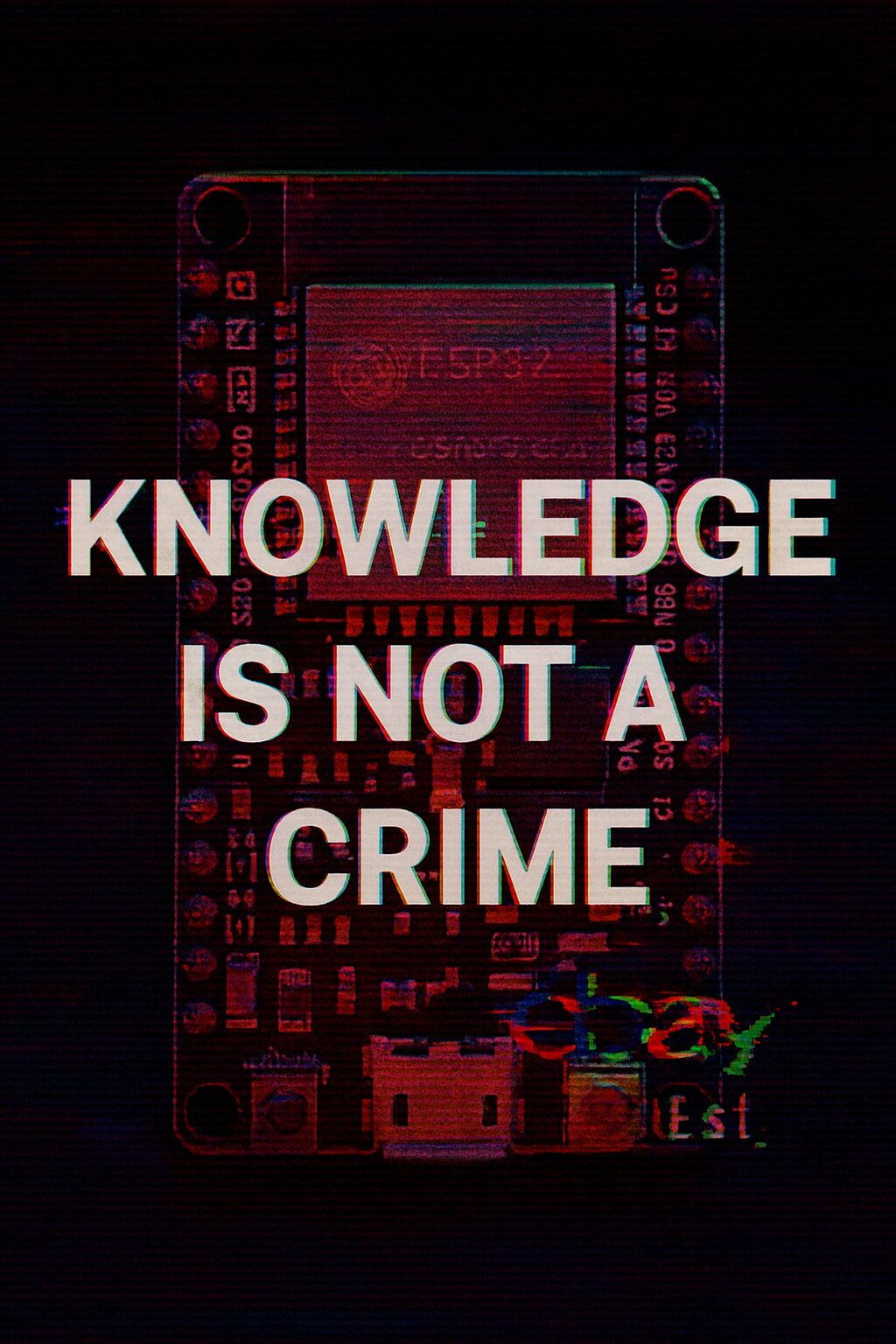
So what’s the answer? Fight back. Don’t let them silence you. Find alternative platforms. Educate your customers. And most importantly, keep learning. Keep building. Keep probing. Because the moment we stop questioning, the moment we accept these arbitrary restrictions, we’re already lost.
This isn’s about me. It’s about a larger trend. A chilling effect on the free flow of information. It’s about the insidious creep of corporate censorship disguised as “safety” and “responsibility.”



0 Comments